Could your stomachaches be linked to ADHD? What new research says


If you have ADHD and gut problems, you’re not alone. A 2026 research review in the Journal of Attention Disorders showed that people with ADHD have 48% higher odds of experiencing gastrointestinal symptoms than people without ADHD.
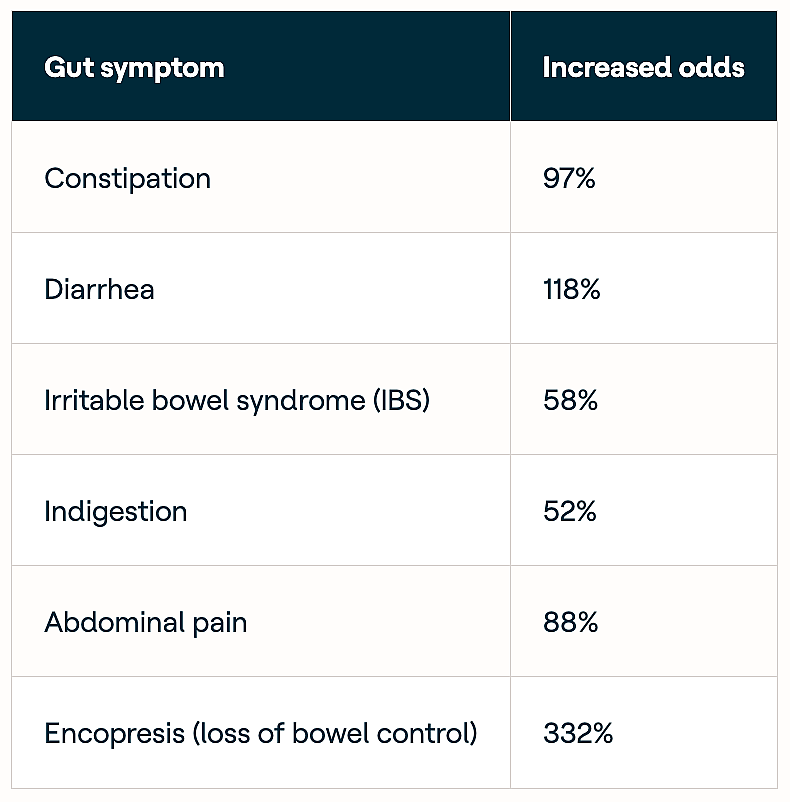
The review found that people with ADHD had 118% higher odds of diarrhea, 97% higher odds of constipation, 58% higher odds of irritable bowel syndrome (IBS), and 52% higher odds of indigestion.
“We can’t yet say ADHD causes these gut problems, or exactly what is driving the link, but the pattern is striking enough to warrant attention,” said the study’s senior author, Saran Shantikumar, Ph.D., an associate clinical professor at Warwick Medical School.
Although researchers don’t fully know why gut problems are more common in people with ADHD, they have some theories, which Understood examines here.
What research says about ADHD and gut problems
Researchers looked at combined information from 23 studies, involving data from more than 1.9 million people ages 2 to 65, from countries including the U.S., Germany, South Korea, and Sweden.
They found that people with ADHD had higher odds of the following gut problems:
A separate study published in 2025 in Scientific Reports found similar patterns for constipation, as well as an increased risk of IBS.
Why are ADHD and gut problems linked?
Although ADHD and digestive symptoms aren’t talked about a lot, it’s something researchers have been trying to better understand for a while. As of now, it’s still unclear what causes what. Do ADHD symptoms cause gut issues, or do gut issues cause ADHD symptoms?
Researchers don’t have an answer to that question just yet. But there are three main theories to help explain what might be happening.
1. Irregular eating patterns
If you have ADHD, you may have trouble regulating emotions, which can sometimes lead to emotional eating or binge eating. You might also struggle with impulsivity, which can look like grabbing food or snacks without thinking or eating quickly without noticing you’re full. And because of hyperfocus, you may also forget to eat on a regular schedule or even skip meals.
These irregular eating patterns are linked to indigestion or discomfort in your stomach, bloating, constipation, and abdominal pain.
2. ADHD medication side effects
A review in PLOS One looked at how ADHD medications like methylphenidate — a stimulant — affect your gut health. Researchers found that kids and teens who take methylphenidate, like Ritalin or Concerta, are more likely to have a decreased appetite, or not feel hungry as often.
Stimulants may also cause abdominal pain. And people who use stimulants to help manage their ADHD may experience the following symptoms:
- Indigestion
- Heartburn
- Stomach pain
- Nausea
- Vomiting
- Bloating
- Constipation
“Digestive upset (i.e., nausea or queasiness) infrequently occurs with both stimulant and non-stimulant ADHD medications,” explains David Goodman, M.D., of the Johns Hopkins School of Medicine. “But if it happens, it doesn’t usually last long before it goes away on its own. If it lasts longer than two weeks, contact your health care provider.”
3. Gut-brain axis and the vagus nerve
Your gut and brain are in constant communication, connected in part by the vagus nerve, which is actually a pair of nerves that run from your brain to your gut and play a role in everything from digestion and heart rate to breathing and swallowing. Your brain uses this pathway to send signals to your gut to help with digestion. And gut bacteria can send signals back to your brain that may affect your mood, behavior, and — as researchers are exploring — even ADHD symptoms.
Researchers are studying how changing the bacteria in your gut — such as through probiotics — may help with ADHD symptoms. However, more work is needed to better understand how to best use things like probiotics for people with gut problems and ADHD.
Gut symptoms at different ages
Anyone with ADHD can have gut problems, but some symptoms are more common at certain ages. And behavioral differences at different age groups may impact how these symptoms show up.
Kids with ADHD
Kids with ADHD can want to eat at irregular times or be picky eaters due to sensory challenges and sensitivities to foods. Here are some common symptoms they might experience:
- Stomach pain
- Constipation
- Encopresis
Encopresis is the involuntary passage of stool outside of the toilet in children 4 years or older. This may look like your child having stool in their clothes after sleeping. It is usually caused by severe constipation.
Teens with ADHD
Because older kids and teens with ADHD are more likely to deal with anxiety or be affected by disruptions in their routine, you might see issues like:
- IBS
- Constipation
- Heartburn
- Stomachaches
As with younger kids, picky or irregular eating can also make digestive problems worse.
Adults with ADHD
In adulthood, you’re more likely to struggle with maintaining schedules, especially if you’re juggling other responsibilities like school, work, or parenting. These factors can make it more difficult to eat on a regular schedule.
If you have ADHD, you’re also more likely to struggle with sleep, which can also impact your digestion. That may be why adults with ADHD sometimes experience the following gut issues:
- Chronic gut discomfort
- Heartburn
- Constipation
- IBS
How to manage gut problems when you have ADHD
It can be uncomfortable to experience gut issues, no matter your age. But there are a number of things you can do to address your symptoms, especially if your digestion problems stem from eating habits or medication side effects.
Here are some strategies that can help.
- Track symptoms along with medication timing. It can be hard to tell the difference between gut issues related to ADHD behaviors and gut issues related to ADHD medications. Tracking your symptoms can give your health care team a clearer picture of what you’re going through.
- Flag any medication side effects. Your health care provider can help you find the right medication and dose. “Sometimes, the digestive problems are intolerable and you may need to change the medication,” Goodman says. “Sometimes, the problems may improve if you slow your dose increases. Over-the-counter ginger pills or antacids may help with the nausea until your body gets used to the medication.”
- Talk to a registered dietitian. Consulting with a dietitian and building an eating schedule can help you avoid binge eating and overeating, as well as skipping or forgetting meals.
Gut problems can range from mild to severe and affect everyone differently. If you’re experiencing frequent or painful symptoms — or if the symptoms are affecting your quality of life — it’s important to talk to your health care team.
Although most gut problems aren’t serious, there are a few symptoms that warrant seeing a health care provider right away:
- Bloody or dark, black-colored stools
- Fevers or night sweats
- Inability to pass gas
- Unexplained weight loss
- Inability to pass stool despite over-the-counter treatments (i.e., a stool softener)
By tracking your symptoms and consulting with your health care team, you can figure out the gut health strategy that works best for you.
This story was produced by Understood and reviewed and distributed by Stacker.